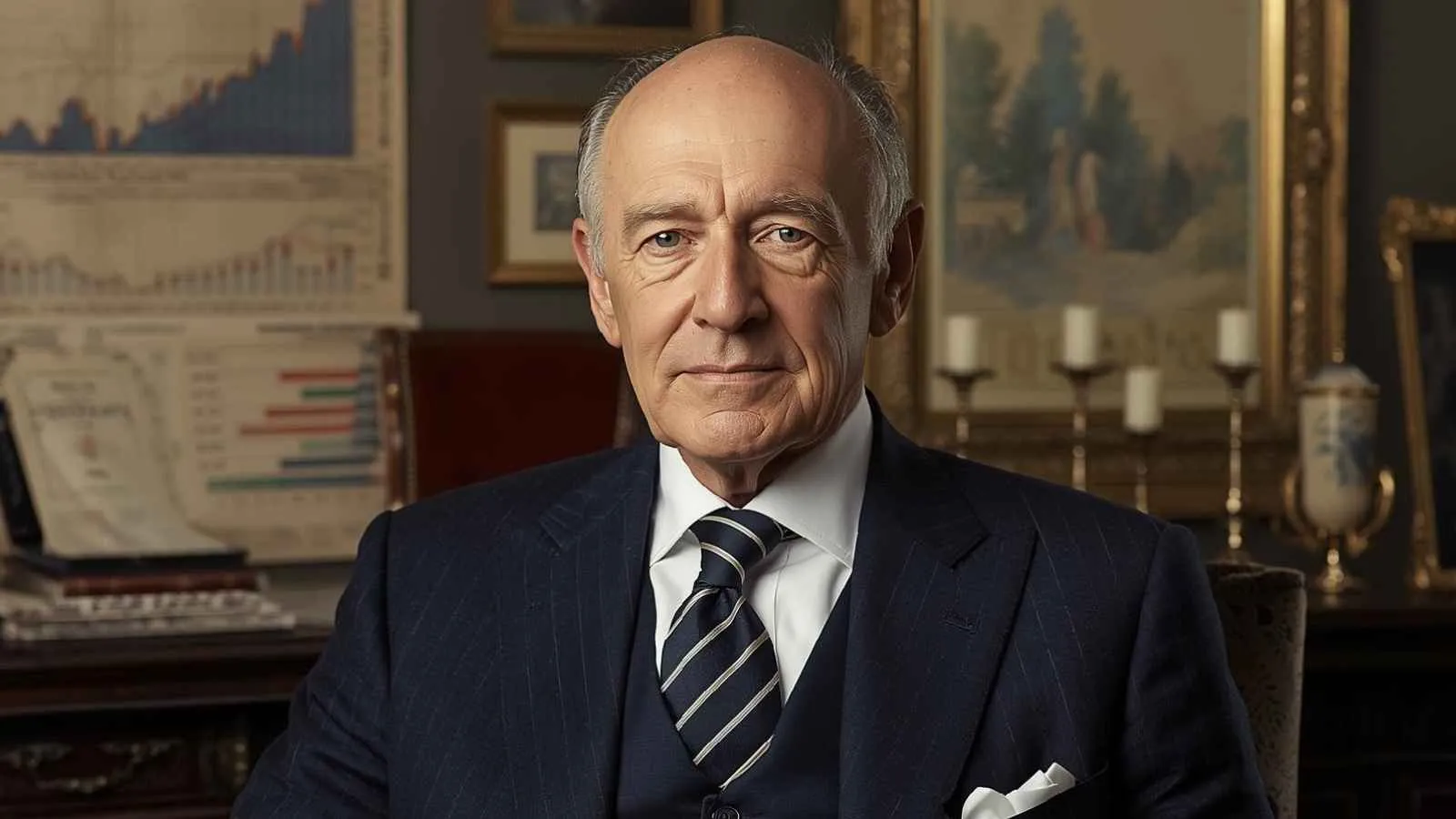
Jacob Rothschild, a prominent figure in the banking world, is part of the renowned Rothschild family, whose wealth and influence have spanned centuries. Known for its secretive nature and vast financial empire, the Rothschild family has become synonymous with high finance and global influence. Jacob Rothschild, in particular, has played a pivotal role in expanding the family’s fortune, transitioning it from traditional banking to diverse investments in real estate, private equity, and philanthropy. Despite his low-profile public persona, Rothschild has consistently been regarded as one of the wealthiest individuals in the world. However, estimating his exact net worth is a challenging task, due to the family’s deliberate privacy and their diversified assets. This article delves into Jacob Rothschild’s financial journey, explores his major investments, and provides an overview of the Rothschild family wealth, giving readers a comprehensive look at one of the most influential financial dynasties in history.
Early Life and Background
Jacob Rothschild was born into one of the most storied families in the world of finance. As the grandson of Nathan Mayer Rothschild, founder of the British branch of the Rothschild banking empire, Jacob’s early life was steeped in privilege, power, and the legacy of immense wealth. Raised in London, he was educated at Eton College, followed by a degree in History from the University of Oxford. These formative years not only provided him with a top-tier education but also set the stage for his future in the banking and investment world.
Jacob’s early career began at N.M. Rothschild & Sons, the family’s prestigious financial institution. Joining the firm in the 1960s, Jacob quickly gained experience in various areas of banking and investment management. However, it wasn’t until 1980 that he truly made his mark by founding RIT Capital Partners, a major vehicle for the family’s investment strategy. This move allowed Jacob to transition the family wealth from traditional banking into more modern, diversified asset management, focusing on private equity, hedge funds, and real estate investments.
While the Rothschild name carried significant weight, Jacob’s journey was marked by a personal drive to carve out his own identity in the financial world. He became known for his ability to navigate the changing global financial landscape, leveraging the family’s historic wealth in ways that ensured it would not only survive but thrive in the modern era. His early career and investments paved the way for him to become one of the most influential financiers of his time.
The Rothschild Family Legacy and Wealth
The Rothschild family’s fortune traces its origins back to Mayer Amschel Rothschild, who founded a banking business in Frankfurt, Germany, in the late 18th century. His innovative financial strategies, particularly his ability to finance governments and major infrastructure projects across Europe, laid the foundation for one of the wealthiest and most powerful dynasties in history. Mayer’s five sons expanded the family business across Europe, establishing banking branches in London, Paris, Vienna, Naples, and Frankfurt. By the 19th century, the Rothschild name had become synonymous with global finance, and their wealth seemed limitless.
While the Rothschild banking empire gradually lost its prominence in the 20th century, the family’s wealth was preserved through diversified investments in real estate, mining, agriculture, and art. The family maintained a low public profile, and its wealth was carefully managed to avoid scrutiny. This secrecy only fueled the Rothschild mystique, with rumors of their continued financial control over world affairs perpetuating in the media.
Jacob Rothschild, as a key figure in the family’s modern wealth management, continued this tradition of discretion. Under his leadership, the family’s assets were not just preserved but significantly grown. He moved the family’s interests away from traditional banking into investment management through RIT Capital Partners, an entity that became central to the family’s financial strategy. Through these diversified holdings, Jacob expanded the family fortune in the 21st century, ensuring its relevance in today’s global financial landscape.
The Rothschild legacy is not just about accumulated wealth; it’s also about influence, strategic foresight, and a keen understanding of global economic shifts.
Jacob Rothschild’s Personal Wealth and Career
Jacob Rothschild’s personal wealth has grown significantly over the decades, largely due to his strategic management of the family’s investments. While precise figures on his net worth remain elusive due to the family’s preference for privacy, estimates place his wealth in the billions, much of it tied to his control of RIT Capital Partners. Founded in 1988, RIT Capital Partners has become one of the UK’s leading investment firms, with a diversified portfolio that spans various sectors, including private equity, venture capital, real estate, and hedge funds. The firm’s investments are spread across industries, including technology, energy, and financial services, helping to ensure a steady stream of returns.
One of Jacob’s key strengths has been his ability to anticipate market shifts and position the family’s assets in emerging opportunities. While traditional banking was the foundation of the Rothschild wealth, Jacob’s ability to pivot toward asset management allowed the family to remain a dominant force in global finance. Under his leadership, RIT Capital Partners has delivered solid returns, helping to grow the family’s fortune while maintaining the values of discretion and long-term stability.
In addition to his work with RIT, Jacob has invested in a range of personal ventures, including real estate developments and art collections. His business acumen has allowed him to build and preserve his wealth, while his leadership in RIT Capital Partners ensures the Rothschild legacy will continue to thrive for generations to come. His influence in global finance remains substantial, with connections to influential political and business figures worldwide.
Philanthropy and Social Influence
Beyond his business ventures, Jacob Rothschild has also made a significant mark in the world of philanthropy. A key element of the Rothschild family legacy is its long-standing tradition of charitable giving, and Jacob has continued this with both personal and family-wide contributions to various causes. The Rothschild Foundation, established in 1979, is one of the primary vehicles for the family’s philanthropic efforts. It supports a wide range of causes, particularly in the fields of education, the arts, and historical preservation.
One of the most notable areas of Jacob’s charitable focus is the preservation of cultural heritage. The Rothschilds have long been patrons of the arts, and Jacob has continued to support institutions like the National Gallery in London, the Royal Academy of Arts, and various Jewish cultural foundations. His personal contributions have helped maintain and expand these institutions, ensuring they continue to thrive for future generations.
Jacob Rothschild’s philanthropy also extends to education and medical research, where the family has been involved in funding scholarships, academic programs, and innovative healthcare projects. His commitment to giving back is not only about preserving art and culture but also about fostering progress and supporting the community. His influence in these areas has earned him respect in both financial and philanthropic circles.
Moreover, the Rothschild family’s prominence has afforded Jacob access to a wide network of influential individuals, further amplifying his ability to drive social change. Through these networks, he has influenced global economic policies and championed causes that align with his values of sustainability and long-term societal benefit.
The Mystery of Rothschild Family Wealth
One of the most intriguing aspects of Jacob Rothschild’s wealth is the family’s insistence on privacy and discretion. Despite being one of the wealthiest families in the world, the Rothschilds have consistently chosen to keep the specifics of their fortune out of the public eye. This has led to a great deal of speculation and intrigue, fueling conspiracy theories and rumors about their financial influence on global politics and economics. However, much of the family’s wealth remains tied up in private entities, such as RIT Capital Partners, making it difficult for outsiders to accurately assess its true value.
The Rothschild family’s low profile is not merely a product of secrecy; it is also a reflection of their deep-rooted values. The family’s wealth has always been managed with an eye toward long-term preservation rather than short-term gains, which has required careful planning and strategic decision-making over generations. Jacob Rothschild has ensured that this legacy continues by focusing on diversification and innovation in investment strategy, all while maintaining a firm commitment to privacy.
Furthermore, the family’s wealth is spread across multiple generations, with various branches of the Rothschild family holding different stakes in assets, businesses, and investments. This distribution further complicates any attempt to pin down an exact number for Jacob Rothschild’s personal net worth. However, estimates suggest that his personal wealth, coupled with his control over RIT Capital Partners, places him among the wealthiest individuals in the world.
Despite the mystery surrounding their fortune, one thing remains clear: the Rothschilds continue to wield significant financial power and influence in global markets.
RIT Capital Partners and Its Impact on Rothschild Wealth
At the heart of Jacob Rothschild’s modern financial empire is RIT Capital Partners, a key instrument for managing and growing the Rothschild family wealth. Founded in 1988, RIT Capital Partners was designed to provide a more diversified, less traditional approach to wealth management, distinguishing it from the family’s historic banking roots. This move marked a shift in how the Rothschilds managed their fortune, transitioning from banking to a broader range of investments in equities, hedge funds, private equity, real estate, and other alternative assets.
Under Jacob Rothschild’s leadership, RIT Capital Partners has consistently delivered strong returns, helping to solidify the family’s wealth across multiple sectors. The firm operates with a global outlook, investing in a mix of assets that span various markets and industries, including technology, energy, and healthcare. Notably, the firm focuses on long-term, high-impact investments, reflecting the Rothschild philosophy of sustainable wealth preservation. This strategy has positioned RIT as a leader in private investment management and has been crucial in expanding the Rothschild family’s wealth beyond traditional banking.
Moreover, RIT’s investment strategy is often characterized by a measured approach, with a keen focus on risk management and diversification. This has allowed the firm to weather economic fluctuations while continuing to grow its assets. Through this method, Jacob Rothschild has ensured that the family’s legacy remains not only intact but thriving in the modern era. RIT Capital Partners has become a central pillar of the Rothschild fortune, allowing the family to adapt to the changing financial landscape while safeguarding its position as one of the world’s wealthiest dynasties.
The Influence of Jacob Rothschild in Global Finance
Jacob Rothschild’s influence extends far beyond his management of the Rothschild family’s wealth; he is widely regarded as one of the most prominent and respected figures in global finance. His vast network of influential connections, combined with his long track record of strategic investment, has allowed him to wield significant power in both the financial and political spheres. Rothschild’s role at RIT Capital Partners has given him access to some of the most important business and financial networks in the world, further cementing his influence.
One of Rothschild’s defining attributes is his ability to navigate complex financial landscapes and spot emerging opportunities. Over the years, he has been involved in numerous high-profile deals and investments that have shaped global markets. For example, his foresight in investing in hedge funds, private equity, and real estate in the 1990s and 2000s has paid off immensely, ensuring that the family’s wealth continues to grow despite the volatility in traditional banking sectors.
Jacob’s expertise also extends to his roles in various boards and advisory positions. He has served on the boards of several influential companies and charitable organizations, where his advice is sought on matters ranging from economic policy to global market trends. His insights have been invaluable to leaders in both business and government, helping to shape economic policies and investment strategies at the highest levels.
While much of Jacob Rothschild’s wealth and influence is rooted in his family’s legacy, his own achievements have ensured that the Rothschild name remains a powerful force in today’s global economy.
The Future of the Rothschild Legacy
As Jacob Rothschild’s influence continues to shape the financial landscape, the future of the Rothschild legacy is poised for continued prominence. Although Jacob has gradually stepped back from the day-to-day management of RIT Capital Partners in recent years, his leadership has laid the groundwork for the family’s wealth to thrive in the generations to come. The current structure of RIT Capital Partners, with its diversified investment portfolio and global reach, ensures that the Rothschild family will continue to have a significant stake in the world’s financial markets.
The Rothschild family has always maintained a focus on long-term wealth preservation, and this principle is likely to remain central to their approach. With investments spanning a wide array of industries—from finance to technology to real estate—the family’s wealth is spread across sectors that are expected to experience continued growth in the coming decades. As global markets evolve, the Rothschilds’ ability to adapt and diversify will likely ensure their legacy remains influential.
Furthermore, the younger generation of Rothschilds has begun to play an increasing role in managing the family’s wealth, continuing Jacob’s vision while adding their own perspectives and expertise. The Rothschild name is not only associated with wealth but with leadership in financial strategy, philanthropy, and global economic influence. As the world continues to change, the family’s legacy of shrewd investments, discretion, and philanthropy will likely ensure that the Rothschilds remain a key player in both finance and global affairs.
In many ways, the Rothschild legacy is a testament to the power of strategic foresight, adaptability, and the ability to maintain wealth across centuries, ensuring that the family will continue to influence future generations.
Jacob Rothschild’s Wealth and the Global Economy
Jacob Rothschild’s immense wealth has not only shaped his personal legacy but also had a broader impact on the global economy. As one of the wealthiest and most influential financiers in the world, his strategic decisions in investment and finance have had far-reaching consequences, influencing industries, markets, and economies globally. Through his leadership of RIT Capital Partners, Rothschild has played a critical role in directing capital into key areas of the global economy, including emerging markets, technology startups, and alternative investment vehicles such as private equity and hedge funds.
Rothschild’s influence extends to the way modern finance is practiced. He has been at the forefront of the shift away from traditional banking, leading the charge in the development of more sophisticated financial instruments and investment strategies. His ability to spot trends and invest in industries that are on the cusp of transformation has earned him recognition as a visionary investor. For example, his early investments in technology companies have paid massive dividends as these firms grew into dominant players in their respective industries.
Moreover, Rothschild’s impact isn’t just confined to financial markets. His strategic investments often align with global economic shifts, such as the growth of sustainability-focused companies, renewable energy, and healthcare technology. These investments have the potential to shape industries and policies that will define the next century, contributing not only to the family’s wealth but to broader economic and environmental progress.
Jacob Rothschild’s influence in global finance, coupled with his ability to adapt to changing economic trends, positions him as a key player in the shaping of the global economy for years to come.
Jacob Rothschild’s Personal Life and Public Image
Despite his vast wealth and influential career, Jacob Rothschild has maintained a relatively private and low-key public persona. Unlike many other figures in the financial world, Rothschild rarely seeks the limelight, preferring to keep his personal life separate from his business endeavors. This reserved approach has only added to the mystique surrounding the Rothschild family, whose name is often associated with secrecy and high-level influence.
Jacob’s personal life is marked by his dedication to both his family and his philanthropic efforts. He has been married twice, first to Serena Dunn, with whom he has three children, and later to Lady Victoria Hervey, a British aristocrat. His family has played an integral role in his personal and professional life, with his children also becoming involved in various aspects of the family’s business and philanthropic activities. His son, Nathaniel Rothschild, has been particularly active in the family’s financial operations, following in Jacob’s footsteps and managing significant investments.
Although he has chosen to remain largely out of the media spotlight, Rothschild’s influence is felt globally through his various professional and charitable efforts. He is known for his measured, thoughtful approach to both business and life, gaining respect for his intellectual acumen and his ability to navigate complex financial and political landscapes. This understated approach has allowed him to remain a figure of quiet power, with his reputation for discretion and careful decision-making contributing to his legacy.
In the public eye, Jacob Rothschild is viewed not only as a wealthy financier but as a symbol of stability, integrity, and the enduring strength of the Rothschild name.
Conclusion
Jacob Rothschild’s extraordinary wealth and influence are a testament to both his strategic vision and the enduring legacy of the Rothschild family. From the early days of his family’s banking empire to his pioneering work in modern investment management through RIT Capital Partners, Jacob has positioned himself as one of the most respected and successful financiers in the world. His ability to navigate complex global markets, diversify investments, and adapt to economic changes has allowed the Rothschild name to remain synonymous with wealth, power, and influence.
Beyond his financial accomplishments, Jacob’s commitment to philanthropy, cultural preservation, and social responsibility further solidifies his legacy. Through his charitable endeavors, he has made significant contributions to education, the arts, and healthcare, ensuring that the Rothschild family’s wealth continues to have a positive impact on society.
Though much of Jacob Rothschild’s wealth remains private, the value of his influence in global finance is undeniable. The strategic decisions made under his leadership have not only shaped the Rothschild family’s financial future but also played a role in the evolution of modern investment practices and the broader economy. As the family continues to adapt and innovate in the changing landscape of global finance, the Rothschild legacy will undoubtedly endure, securing its place as one of the most influential dynasties in history.
Ultimately, Jacob Rothschild’s wealth is more than just a measure of monetary success—it is a reflection of a long-standing tradition of business acumen, strategic foresight, and a commitment to making a lasting difference in the world.