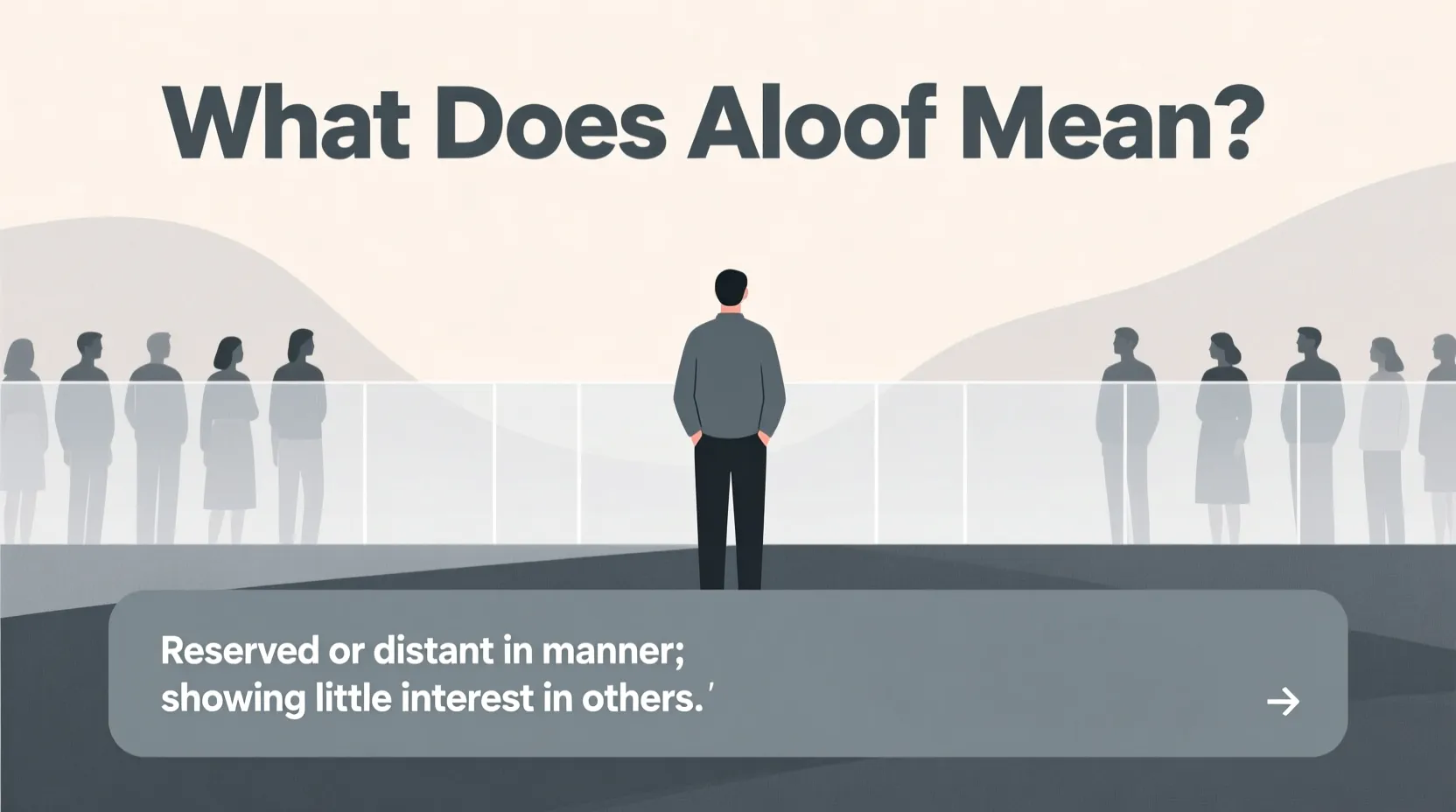
Hey! 👋 Today, I want to tell you about a word you might have heard but aren’t exactly sure about – “aloof” 🤔. I remember a time when I was meeting new people at my office, and there was this one person who seemed really distant and reserved – in other words, aloof.
At first, I felt a bit confused and wondered if they didn’t like me. But then I decided to handle it differently. I started talking to them slowly, getting to know them, and eventually realized that being aloof just means someone prefers to stay a bit distant or reserved – it doesn’t always mean they’re being rude or negative.
From that experience, I learned that sometimes people just like their own space, and we shouldn’t take it personally.
🧠 What Does Aloof Mean in Text?
In simple terms, aloof refers to someone who seems emotionally distant, reserved, or uninterested. They aren’t necessarily rude; they just keep a bit of personal space or don’t show much emotion.
Example:
- “He’s been kind of aloof in our chat lately… not ignoring me, just distant.”
In short:
Aloof = distant, reserved, emotionally detached = keeping space in conversations or relationships.
📱 Where Is Aloof Commonly Used?
You’ll often encounter aloof in these platforms or situations:
- Texting & iMessage 💬 — describing someone’s distant replies.
- Snapchat/TikTok 📱 — in comments or captions about personalities.
- Social media posts 🖼️ — calling someone aloof in memes or story captions.
- Gaming chats 🎮 — when someone doesn’t join the banter.
Tone & Style:
- Mostly casual
- Neutral to slightly critical
- Social-media–friendly; not typically used in professional emails
💬 Examples of Aloof in Conversation
Here are some realistic texting scenarios:
A: “Hey, why didn’t you reply last night?”
B: “Sorry, been kinda aloof 😅”
A: “Wanna hang out this weekend?”
B: “I’m feeling a bit aloof, maybe next time.”
A: “You seem quiet today.”
B: “Just aloof… not ignoring you though.”
A: “Did you like the movie?”
B: “It was okay… I’ve been a little aloof lately.”
A: “Why aren’t you commenting on the pics?”
B: “I’m just aloof sometimes, lol 😬”
🕓 When to Use and When Not to Use Aloof
✅ When to Use:
- Friendly chats about moods or personality
- Casual social media posts or comments
- Light teasing or describing yourself humorously
❌ When Not to Use:
- Formal work emails
- Serious discussions (e.g., conflicts or emergencies)
- Professional networking
Comparison Table:
| Context | Example Phrase | Why It Works |
|---|---|---|
| Friend Chat | “No worries, just feeling aloof 😅” | Casual & relatable |
| Work Chat | “I’ve been a bit aloof on this project” | Too informal for professional tone |
| “I’ve been distant lately” | Polite & clear, avoids slang |
🔄 Similar Slang Words or Alternatives
| Slang/Word | Meaning | When to Use |
|---|---|---|
| Distant | Emotionally reserved | Casual or reflective chats |
| Detached | Not emotionally involved | Neutral or formal conversations |
| Reserved | Keeps thoughts private | Social or semi-formal settings |
| Cold | Unfriendly or unresponsive | Slightly negative contexts |
| Stand-offish | Avoiding closeness | Casual teasing or describing people |
❓ FAQs
Q1: Is aloof rude?
Not necessarily. Being aloof means keeping a distance, not being disrespectful.
Q2: Can aloof be used positively?
Yes! Sometimes it’s admired as being mysterious or independent.
Q3: How do you text someone who seems aloof?
Keep it light and non-demanding. They may just need space.
Q4: Is aloof the same as ignoring?
No. Aloof people may still engage occasionally but aren’t emotionally expressive.
✅ Conclusion
Understanding the word aloof can save you from misreading texts and social media posts. It’s a neutral term to describe someone distant, reserved, or emotionally detached — not rude, just a little detached. Next time someone seems aloof in a chat, you’ll know exactly what it means and how to respond.